 VitaWise Daily
Healthy Aging
Everyday Strength and Balance After 60: Safe Ways to Practice
Strength and balance support everyday activities such as getting up from a chair, carrying groceries, and walking across uneven ground. They can be practiced at many ability levels. If you have fallen recently, feel unst
By VitaWise Daily · October 13, 2026 · 2 min read

Strength and balance support everyday activities such as getting up from a chair, carrying groceries, and walking across uneven ground. They can be practiced at many ability levels. If you have fallen recently, feel unsteady, or have a health condition that affects movement, ask a clinician or physical therapist for advice before trying new exercises.
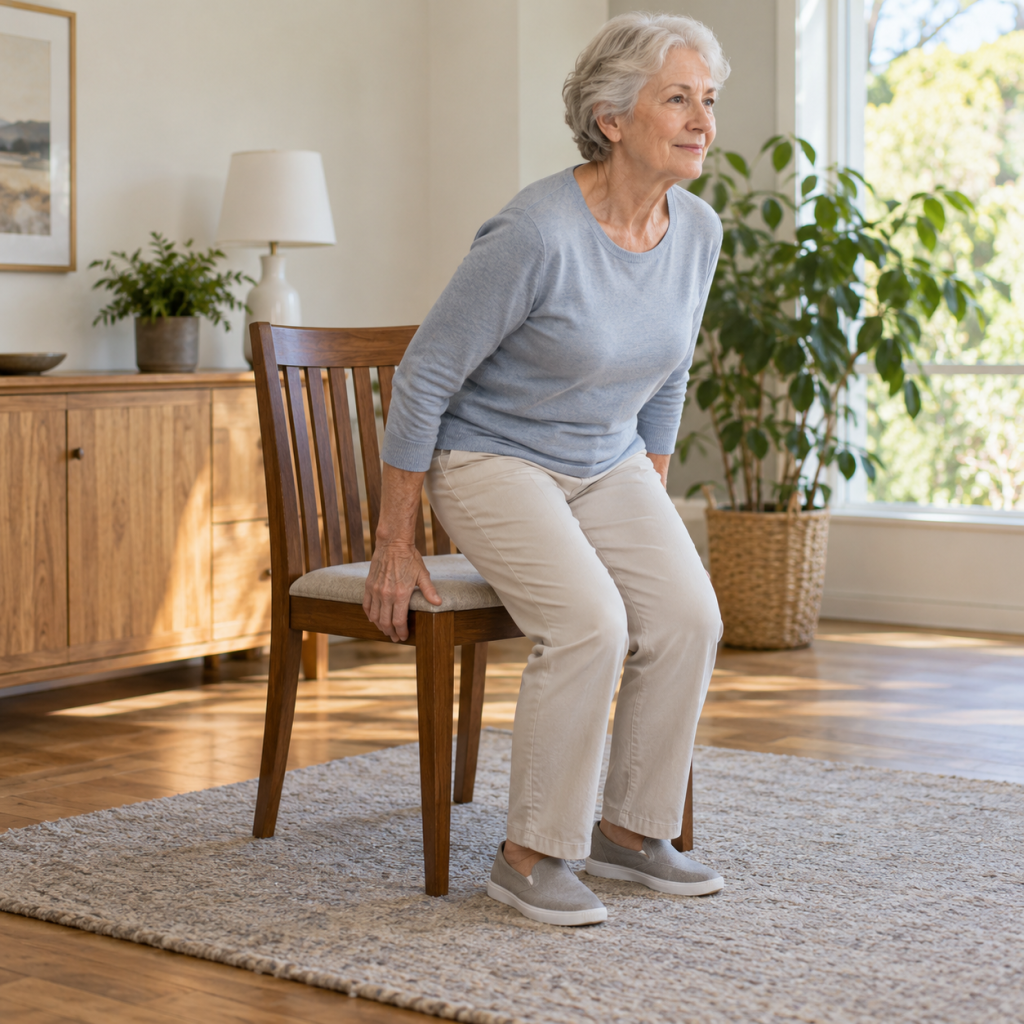
Start with a stable support
Simple options may include standing from a firm chair, heel raises while holding a counter, or shifting weight side to side near a sturdy surface. Keep the area clear, wear shoes that feel secure, and use support that will not slide. A seated movement or supervised class may be more appropriate for some people.
Balance practice should feel controlled. Avoid closing your eyes, standing on unstable surfaces, or practicing near stairs without professional guidance. Stop if you feel dizzy, have pain, or feel unsafe.
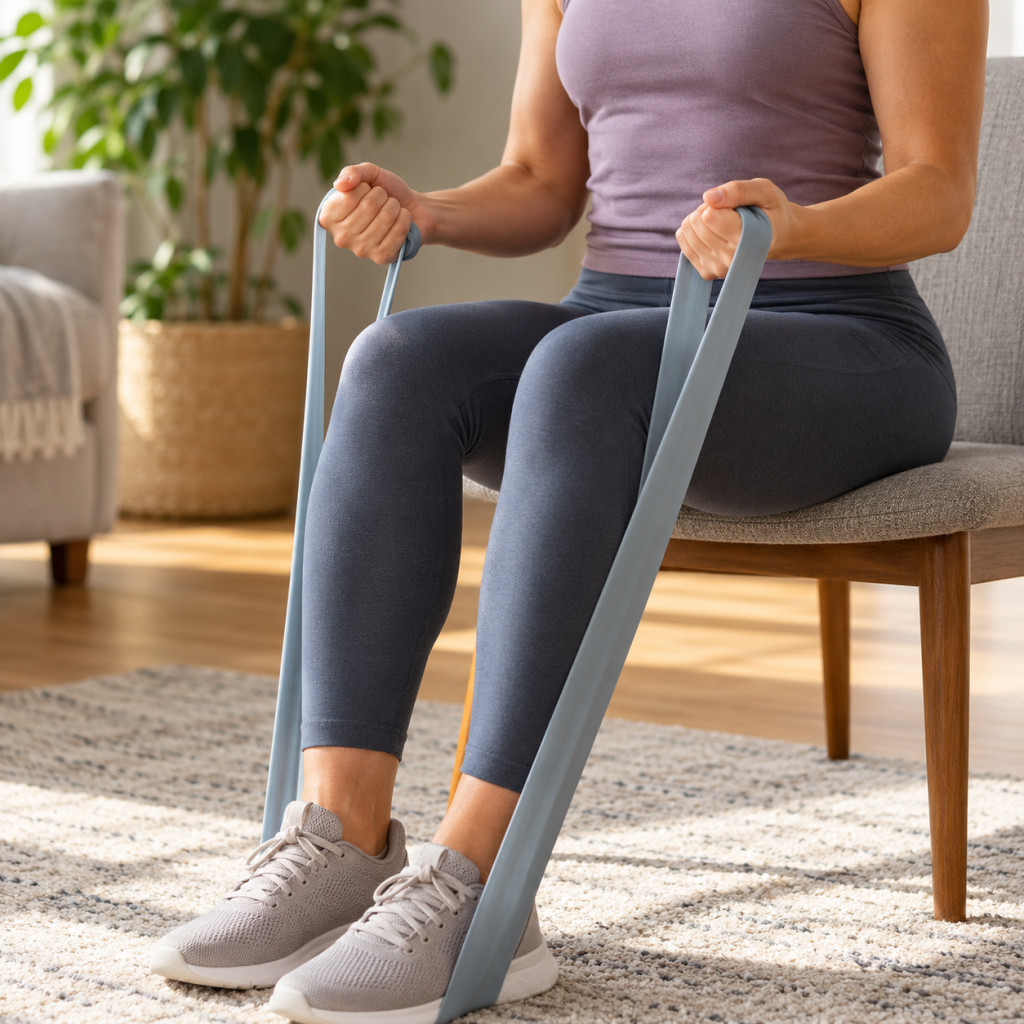
Build strength in everyday ways
Carrying light groceries, rising from a chair, or using a resistance band can work muscles when the movement is safe and comfortable. Begin with a small amount and allow rest between sessions. Progress gradually rather than trying to match someone else’s routine.
The National Institute on Aging describes aerobic, muscle-strengthening, and balance activities as useful parts of physical activity for older adults. What is appropriate depends on a person’s health, ability, and goals.
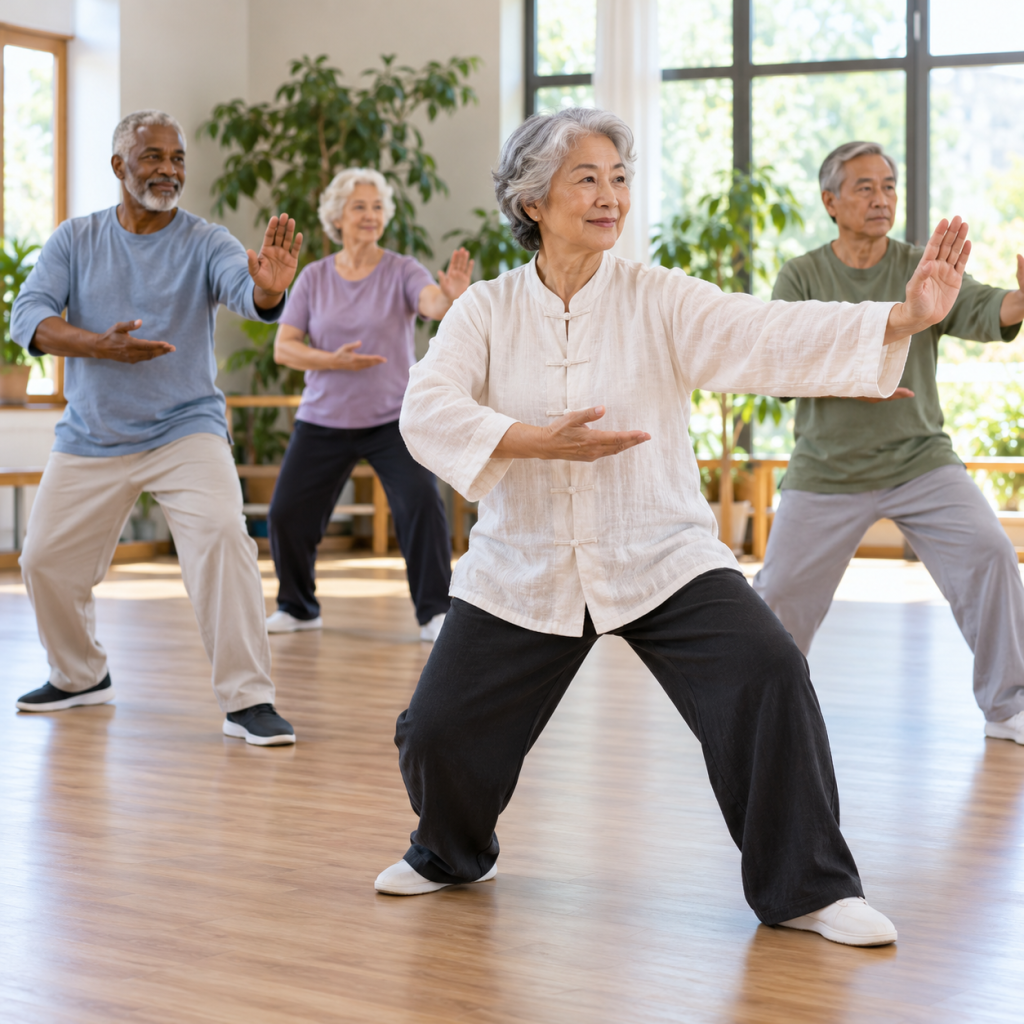
Make practice easier to continue
- Choose a regular time and short duration.
- Keep needed equipment visible and easy to reach.
- Ask someone to join or help set up the space.
- Consider a community class designed for different ability levels.
Evidence note: Read the NIA guide to three types of exercise for general information.
General education only; not individualized fall-prevention or rehabilitation advice.