 VitaWise Daily
Move Better
The Hidden Risk of Sitting Too Long: How Blood Clots Form and How to Protect Your Circulation
Long periods of immobility can slow blood flow and contribute to clot risk, especially when other risk factors are present. Learn the warning signs of DVT and practical ways to keep moving.
By VitaWise Daily · October 31, 2026 · 4 min read
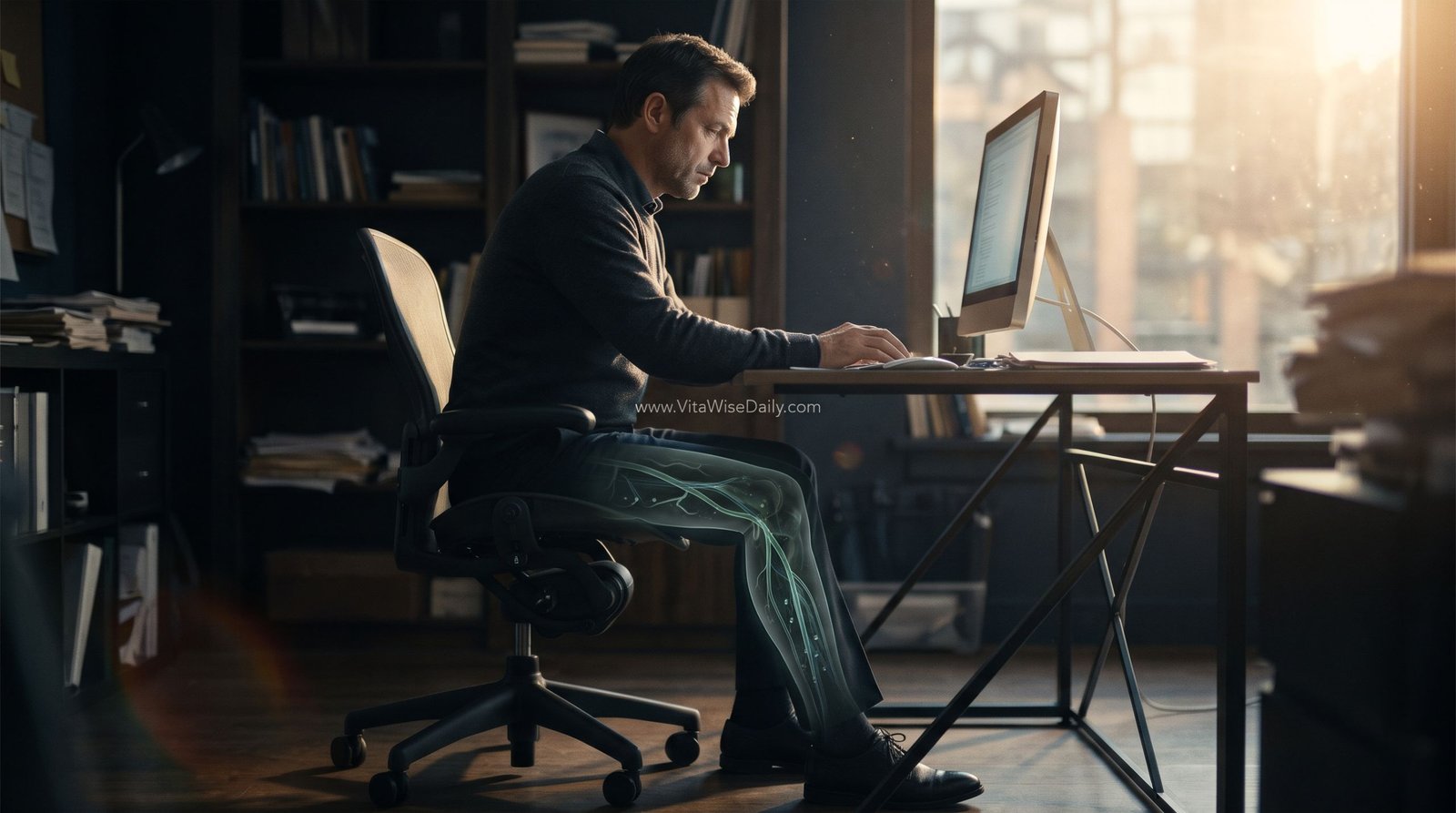
Most people know that sitting too long is not ideal for general health. Fewer realise that long periods of immobility can also contribute to the risk of a blood clot in a deep vein—particularly when other risk factors are present. Deep vein thrombosis (DVT) most often develops in the leg. The concern is that part of a clot can break away and travel to the lungs, causing a pulmonary embolism (PE), which is a medical emergency. This is not a reason to panic every time you take a long flight or spend a day at your desk. It is a reason to understand circulation, know your risk factors and recognise symptoms that need urgent attention.
1. Why stillness changes circulation
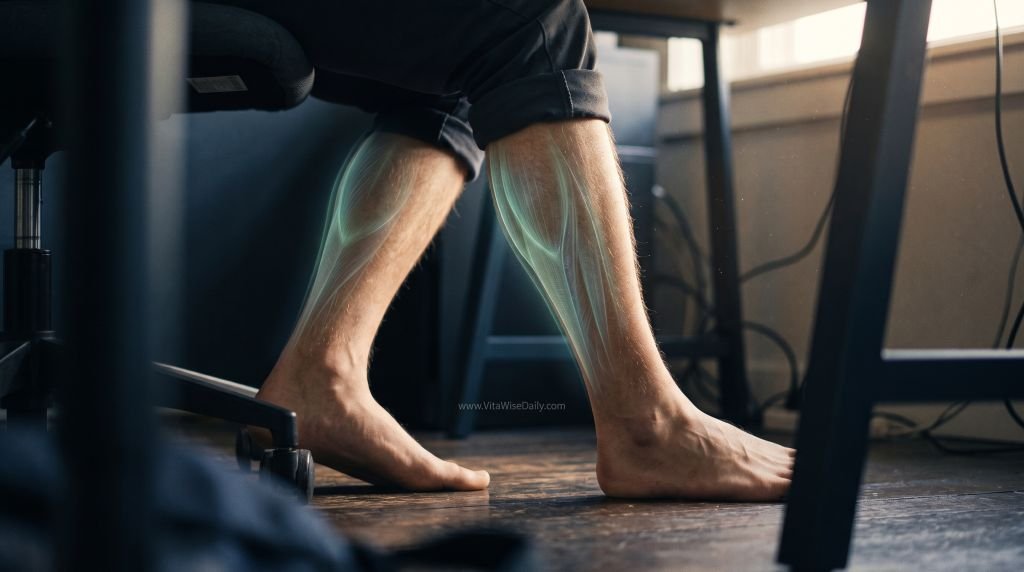
Your calf muscles help push blood through the veins of your legs back towards the heart. When you walk, the muscles contract and help move blood along. When you remain still for a long time, that muscle pump is less active and blood flow in the legs can slow.
Clinicians often explain clot formation through three broad contributors: sluggish blood flow, injury to the blood-vessel wall, and a tendency for blood to clot more readily. You may hear this described as Virchow’s triad. Prolonged immobility can contribute to the first factor, while surgery, illness or other conditions may affect the others.
Anatomical diagrams commonly show arteries in bright cherry red and veins in blue or light blue. The colours help distinguish the two systems; both are essential parts of circulation.

2. Who may face a higher risk?
Risk is not the same for everyone. A long journey or desk-bound day may be low risk for a healthy person, but the picture changes when immobility combines with other factors.
- A previous DVT or pulmonary embolism.
- Recent major surgery, hospital admission or significant injury.
- Active cancer or some cancer treatments.
- Pregnancy and the weeks after giving birth.
- Oestrogen-containing contraception or hormone therapy.
- Some inherited clotting conditions, increasing age, or limited mobility from illness.
If you have a history of clots or several risk factors, ask your healthcare professional about travel and prevention before a long journey. Advice may differ depending on your circumstances and medications.
3. Know the warning signs of DVT and pulmonary embolism
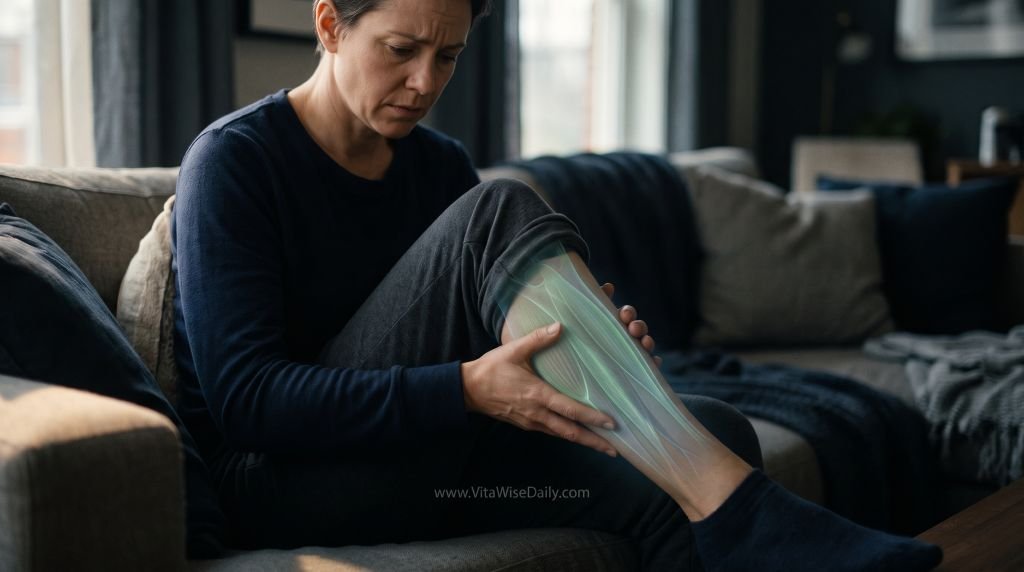
DVT can cause swelling, pain or tenderness in one leg, warmth, and skin that looks redder or darker than usual. Symptoms are not always dramatic, and some people have few obvious signs. A new, unexplained one-sided change deserves prompt medical assessment.
A pulmonary embolism can cause sudden shortness of breath, chest pain that may worsen with a deep breath, coughing up blood, a racing heartbeat, light-headedness or fainting. These symptoms need emergency medical help. Do not wait to see whether they settle.
Do not try to diagnose a clot from a photograph or by comparing the size of your legs. A clinician may need an examination and tests such as an ultrasound or blood test to work out what is happening.

4. Keep moving—and use prevention advice that fits your risk
On long journeys, get up and walk when it is safe to do so. If you are seated, move your ankles, flex your calves and change position regularly. At work, build short movement breaks into the day instead of waiting until you feel stiff.
For people with higher risk, a clinician may recommend specific measures such as properly fitted compression stockings or medication in selected situations. Do not start aspirin or blood thinners on your own; they can cause harm and are not appropriate for everyone.
If you develop symptoms that suggest DVT, seek medical advice promptly. Do not massage a painful, swollen leg or attempt to work the clot out. Early assessment and appropriate treatment matter.
Circulation: what to remember
| Situation | Safer response |
|---|---|
| Long sitting | Move your legs regularly and walk when possible. |
| Higher personal risk | Ask a clinician for tailored prevention advice. |
| One-sided leg swelling or pain | Seek prompt medical assessment. |
| Sudden breathlessness or chest pain | Seek emergency medical help. |
Movement is useful; panic is not
Small movement breaks are sensible for most people, but clot prevention should be personalised when risk is higher. Build everyday movement into your routine with the VitaWise Daily 7-Day Healthy Habits Reset, and talk to a clinician if you have specific clotting concerns.
Health note: This article is educational and does not replace medical assessment. Suspected pulmonary embolism is an emergency. For suspected DVT, seek prompt medical care.
Related reading: Movement Snacks: Simple Ways to Sit Less · Beginner Strength Training at Home · Everyday Strength and Balance After 60