 VitaWise Daily
Eat Better
More Fiber, One Step at a Time: Everyday Foods to Add Gradually
Fiber is found in plant foods such as beans, lentils, oats, fruit, vegetables, nuts, seeds, and whole grains. If these foods are not a regular part of your meals, adding a lot at once may feel uncomfortable. A gradual ap
By VitaWise Daily · September 8, 2026 · 2 min read

Fiber is found in plant foods such as beans, lentils, oats, fruit, vegetables, nuts, seeds, and whole grains. If these foods are not a regular part of your meals, adding a lot at once may feel uncomfortable. A gradual approach lets you find what works for your body and routine.

Build from foods you already enjoy
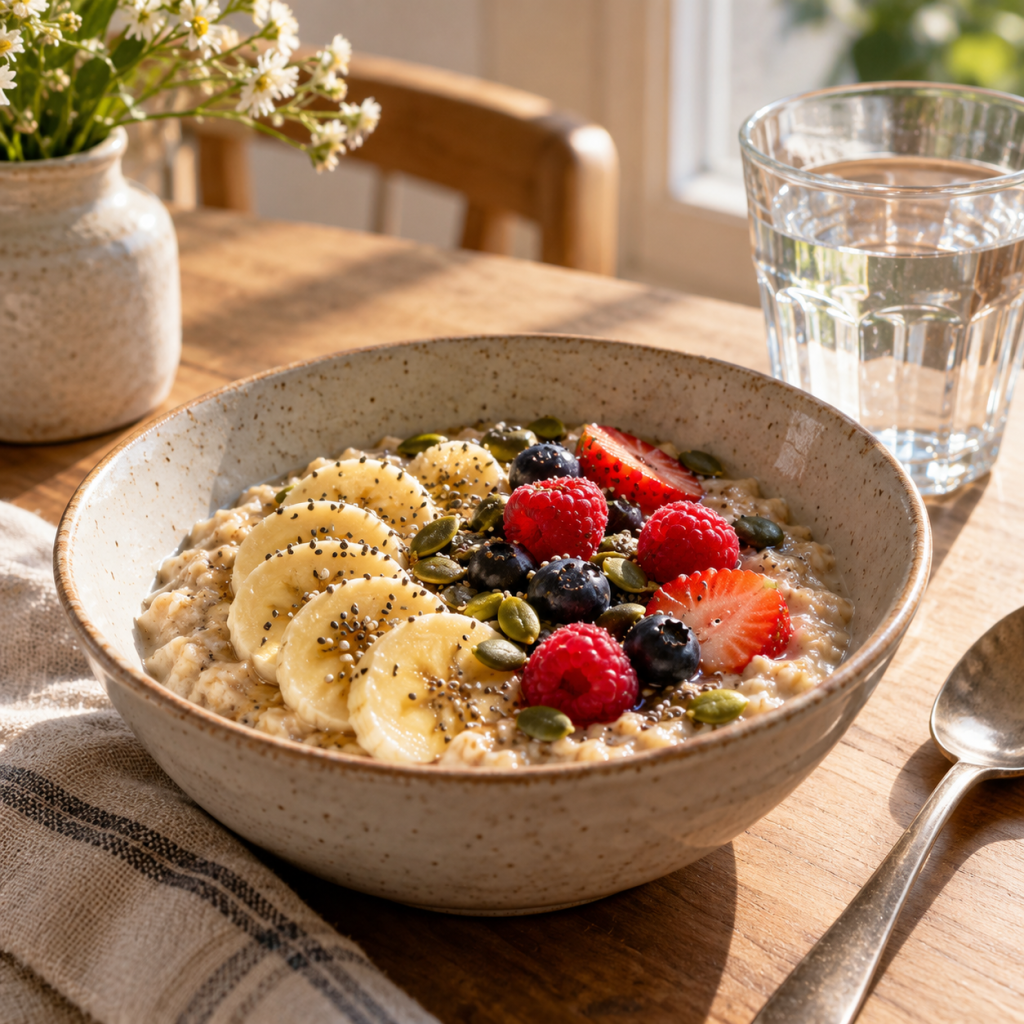
Start with one familiar food: oats at breakfast, beans in soup, fruit with a snack, or vegetables added to a sandwich. Canned beans are convenient; drain and rinse them if you want to reduce some sodium. Frozen vegetables and fruit can also make it easier to keep options on hand.
The World Health Organization recommends that people over age 10 aim for at least 25 grams of naturally occurring dietary fiber each day, but individual needs and medical circumstances vary. Treat guidance as a general reference, not a target you must reach overnight.
Increase gradually and notice how you feel
Add one fiber-rich choice, keep it in your routine for several days, then decide whether to add another. Drink fluids regularly if that is appropriate for you. People with digestive conditions or a prescribed fluid limit should ask a health professional for personalized guidance before making major changes.
- Stir oats into breakfast or yogurt.
- Add beans or lentils to a familiar dish.
- Choose whole-grain bread or rice when you enjoy the taste and texture.
- Keep washed fruit where it is easy to see.

Make convenience part of the plan
Healthy routines depend on what is available when you are hungry. Keep shelf-stable lentils or beans, oats, and whole-grain staples in the cupboard; use frozen produce when fresh options are limited. A small repeatable addition often works better than an ambitious plan that is hard to maintain.
Evidence note: See the WHO healthy diet fact sheet for general fiber and produce guidance.
General education only; not a substitute for personal medical or nutrition advice.